Last updated November 18, 2026
Free written scope consultation - allowances, timeline, and change-order rules on paper before a single trade is scheduled
Driveway & Pavers Maintenance Checklist for Concord Homeowners
You can seal a paver driveway in Concord every two years and still watch it buckle by year seven. It happens more than most homeowners expect, and the reason is simple: sealing protects the surface, but the failure usually starts underneath, in the compacted base. Concord’s clay soils hold water in the wet months and shrink in the dry ones, and that slow cycle works on the base every year whether or not the pavers look fine on top. In this guide we’ll walk through how to tell base movement from surface wear, which maintenance tasks belong before the November rains and which should wait for the dry season, and how to spot grading that’s quietly sending water toward your foundation.
Quick Answer
A driveway paver maintenance plan in Concord needs to cover two separate things: the surface (cleaning, joint sand, sealing) and the base (drainage, grading, and any signs of settlement). Most of the surface work belongs in the dry season, while drainage and grading checks are best done before the November rains arrive. If you only ever address the pavers and never the base, shifting and buckling are a matter of time, not luck.
Styles & brands we work with
- Kitchen remodeling
- Bathroom remodeling
- Home additions & ADU
- Roofing
- Windows & doors
- Driveway & pavers
- Fence
Table of Contents
- Base Movement vs. Surface Wear: How to Tell Them Apart
- The Concord Seasonal Maintenance Calendar
- Joint Sand Replenishment for Concord’s Wind and Runoff
- Reading Drainage Grading Before It Reaches Your Foundation
- Which Pavers and Sealers Hold Up in Concord
- A Step-by-Step Annual Inspection
- Repair or Replace: Making the Call
Base Movement vs. Surface Wear: How to Tell Them Apart
These are two completely different problems with two completely different fixes, and mixing them up is the most expensive mistake a Concord homeowner can make. Surface wear is cosmetic and cheap to address. Base movement is structural, and no amount of sealing will fix it. Learn to read the difference and you’ll save yourself from pouring money into the wrong repair.
Surface wear shows up as fading color, a chalky film on the pavers, or sand that keeps washing out of the joints. The pavers themselves stay flat and locked in place. Base movement is a different animal. Look for these signals:
- Depressions or dips where water pools after rain and stays for hours.
- Rocking pavers that move slightly underfoot, usually along the wheel tracks.
- Widening or uneven joints, especially where one section has dropped and the next hasn’t.
- Heaving along edges, where a paver sits higher than its neighbor.
- Step-downs at the garage apron, indicating the driveway has settled relative to the slab.
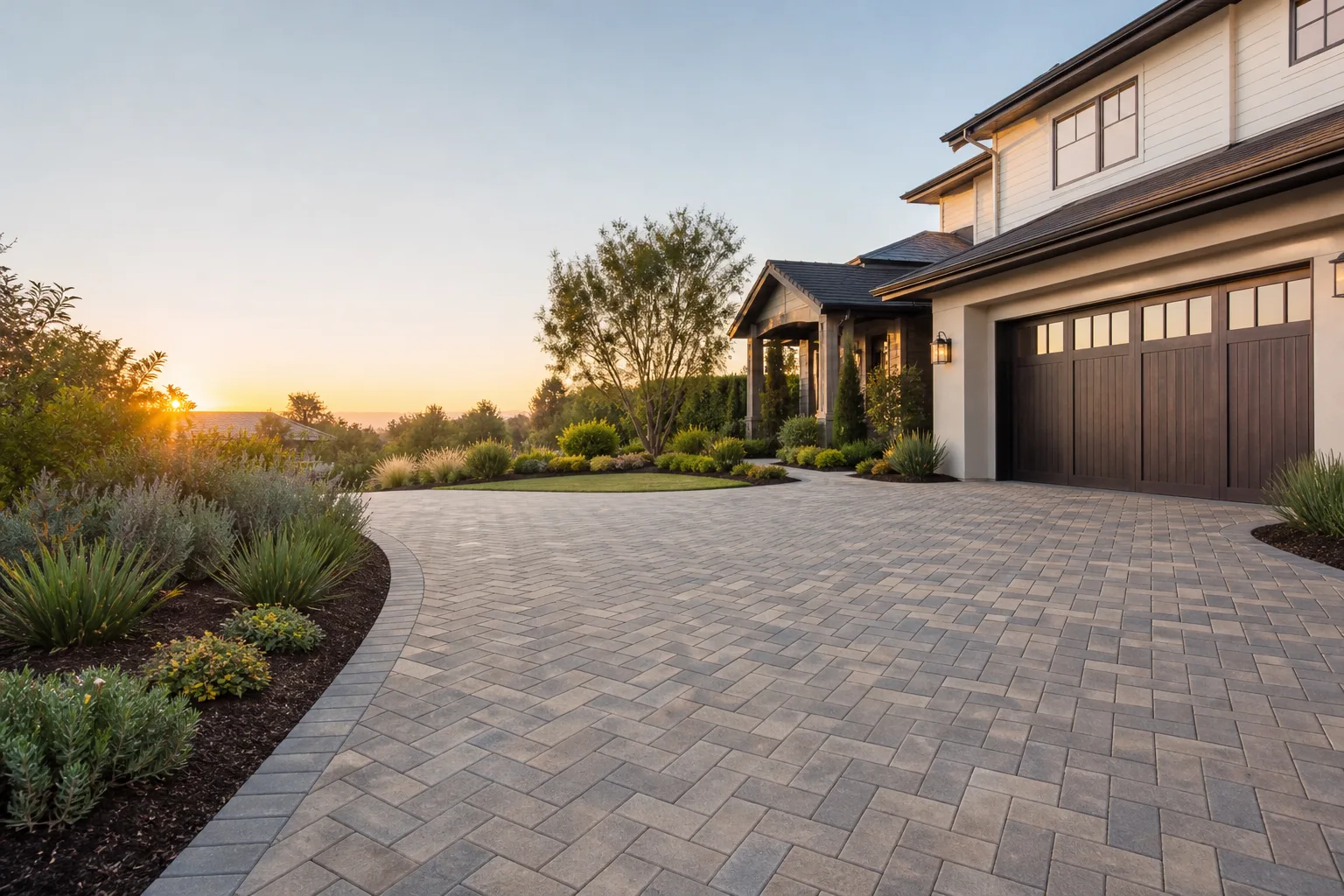
If you see surface wear only, a clean, a joint sand refill, and a fresh sealer will bring the driveway back. If you see any base movement signal, stop. Sealing a moving driveway traps the problem under a nice-looking finish and lets it keep getting worse. In Concord, base issues often trace back to the original installation, where an under-compacted base didn’t hold up to the local clay’s expansion and contraction. Before you commit to any paver work, it’s worth understanding how a proper installation is built from the bottom up, which is covered in our guide to driveway & pavers.
The Concord Seasonal Maintenance Calendar
Timing matters as much as the task itself in Concord. Do the wrong job at the wrong time and you undo the work you just paid for. Here’s how we think about the year in two halves: before the rains and after they pass.
Late summer and early fall, before the November rains. This is your window for everything that protects the driveway through the wet season:
- Deep-clean the pavers while they’re dry and the joints are open.
- Inspect grading and re-route any water that’s headed toward the house.
- Replenish joint sand in any areas that have lost material.
- Clear and check drainage inlets, swales, and any low spots along the perimeter.
- Apply sealer, ideally after several dry days so the surface is fully dry.
Spring and early summer, once the ground has settled from the rainy season. This is the moment to look at what the winter exposed:
- Re-inspect for new dips or rocking pavers that appeared over the wet months.
- Re-check joint sand, especially along the runoff channel where water leaves the property.
- Touch up any efflorescence or staining left by the wet season.
- Plan any real repairs for the driest weeks of the year.
Sealing in the middle of the wet season is a waste of money. Moisture trapped under a fresh coat of sealer causes haze and adhesion problems, and it can actually accelerate the next round of joint sand loss. Keep the sealer for the dry season. Everything that has anything to do with water management belongs before the rains.
Joint Sand Replenishment for Concord’s Wind and Runoff
Joint sand is the unsung hero of a paver driveway. It locks the pavers against each other, keeps the surface from shifting under tire loads, and stops water from diving straight through the joints into the base. When joint sand gets thin, everything else in the driveway has to work harder. In Concord, two forces drive loss faster than most people expect: wind that crosses exposed driveways and runoff that scours the joints on sloped sections.
Here’s how often to check and refill in Concord’s climate:
- Flat driveways with good drainage: check twice a year, top up once a year on average.
- Sloped driveways and driveways with a runoff channel: check quarterly, especially along the slope and at the bottom apron.
- Exposed driveways with no windbreak: check after any stretch of gusty weather.
- Anywhere water visibly flows rather than sheets: check after every heavy rain until you’ve re-graded.
Filling joints matters as much as frequency. Overfill the joints and the excess sand makes a mess and can end up in the storm drain. Underfill them and the pavers start to work loose within a season. The right approach is a dry, clean sweep of fine joint sand worked into the joints, compressed, and topped off if the sand settles. Most homeowners who’ve had ongoing joint sand loss also need a sealer with a joint sand stabilizer built in. If you’ve already got loose pavers and don’t know where to start, the right move is to have the driveway looked at before another wet season arrives, and our team at Construction Concord can assess it during a free estimate.
Reading Drainage Grading Before It Reaches Your Foundation
Grading that’s quietly shifted is the most expensive kind of driveway problem in Concord, because it’s the one that gets discovered after the damage is already done. Water that once sheeted away from the house can, over a few winters of clay soil movement, be redirected toward the foundation. The signs are subtle but readable.
Look for these indicators that your grading is directing water where it shouldn’t:
- Standing water within a few feet of the foundation after a rain, especially along the garage wall or porch base.
- A visible slope change at the top of the driveway where it meets the house or garage apron.
- Soil staining or efflorescence on the base of the house wall, or dark patches that stay damp longer than the surrounding soil.
- Dampness or a musty smell inside the garage or crawlspace after wet weather.
- Settled pavers near the foundation where the ground has dropped slightly, creating a channel for water.
- Erosion lines in the landscaping beds that run parallel to the house rather than away from it.
Any one of these is worth a closer look. Two or more together are a clear signal to have the grading assessed. On a paver driveway, correcting grading can mean lifting a section of pavers, re-shaping the base, and re-laying, which is why it’s so much cheaper to catch early. It’s also a repair that pairs naturally with foundation-adjacent work like a fence along the runoff line or a small addition: the same contractor can see the full picture. If you’re planning multi-area work, that coordinated approach is part of what makes a single-source contractor useful, and it’s why we write about the whole property at Construction Concord.
Which Pavers and Sealers Hold Up in Concord
Concord’s climate is unforgiving in a specific way: strong summer sun that pushes the UV index high, mild wet winters, and clay soil that swells and shrinks with the seasons. The right paver and sealer choice isn’t about the prettiest catalog page. It’s about what stays stable when the ground underneath is moving and the sun is fading color out of the surface.
On the paver side, we work with Belgard, Unilock, Techo-Bloc, Tremron, and Cambridge Pavers because each of those lines has pavers engineered for hard-wearing residential use, and each brings its own mix of colors and formats. Density and water absorption are the qualities that matter most here. Denser, low-absorption pavers resist the clay heave cycle better, and they hold their color longer under strong sun. Manufacturer-backed product lines also matter because paver failures in the wrong product show up as cracking and spalling within a few seasons, while quality lines hold up for years.
On sealers, the key distinction is between film-forming sealers and penetrating sealers:
- Penetrating sealers soak into the paver and protect against moisture and UV without leaving a surface film. They’re generally the more forgiving choice in a climate with meaningful seasonal ground movement, because they don’t trap moisture.
- Film-forming sealers give a glossier look and a stronger barrier, but they demand a fully dry surface at application and can haze or peel if applied too early in the dry season. They also show wear faster on driveways with heavy turning loads.
- Joint sand stabilizers are worth considering alongside either option. A stabilizer that locks the joint sand in place reduces the constant refill cycle in Concord’s wind and runoff zones.
Whatever you choose, expect sealer to be a maintenance item, not a one-time job. Plan to re-seal every two to four years depending on exposure, sunlight, and how much traffic the driveway actually takes.
A Step-by-Step Annual Inspection
Here’s the inspection we’d run on any Concord paver driveway once a year. It takes a morning and catches the problems that cost real money when missed. Do it in the dry season, on a day when the surface is fully dry.
- Walk the full perimeter. Look for settled edges, exposed base material, and any pavers that have shifted out of line.
- Check the interior surface for dips. Bring a straight edge or a level and check across the width of the driveway. Any dip deep enough to hold water is a base problem, not a surface one.
- Test for rocking pavers. Walk slowly along each wheel track and press down. A paver that moves underfoot needs the base looked at.
- Look at the joints. Are the joints full of sand and even, or eroded and uneven? Note where sand loss is happening and trace back to the cause.
- Follow the water. After the first rain of the season, walk the driveway and watch where water goes. Does it sheet toward the street, or does it pool somewhere it shouldn’t?
- Check the foundation line. Look for damp soil, staining, or a slope change along the house wall and garage apron.
- Look at the pavers themselves. Any cracks, spalling, or color fading beyond what you’d expect? That’s a material or age signal, not a base problem.
- Write it all down. A simple sketch with problem areas marked makes it much easier for any contractor to quote the right fix.
If you have a fence along the driveway, check the posts for movement too. Fence posts and paver edges often fail together because they’re anchored in the same soil, and catching both at once saves on a second round of work. Our team handles fence installation alongside paver work for exactly this reason.
Repair or Replace: Making the Call
The hardest part of paver maintenance is knowing when to stop maintaining and start repairing. Here’s how we draw the line.
Repair is the right call when: movement is isolated to one small area, drainage issues are recent, joint sand loss is manageable with a stabilizer, and the pavers themselves are still sound. A targeted lift-and-rebuild of one section can add many years of life to the rest of the driveway.
Replacement is worth considering when: settling is widespread across the whole surface, pavers are showing structural cracks and spalling, the base is failing across a large area, or correcting grading would require lifting more than half the driveway. At a certain point, replacing the driveway with a properly built base is cheaper than patching it every season. If an addition or ADU is on your horizon, it’s also the moment to think about the driveway alongside it, because the same construction work and the same crew access apply. Our home additions & ADU team works through site and drainage questions that overlap with hardscape work, so both projects get planned together rather than against each other.
Common Mistakes to Avoid
- Sealing a driveway that’s moving. Sealing the surface on a failing base traps the problem and hides the signs that would have told you to fix it earlier. Always check for base movement before applying any sealer.
- Skipping joint sand because the driveway “still looks fine.” Joint sand loss is invisible from a distance but is the first thing that lets pavers start moving. Check twice a year in Concord’s windy, runoff-heavy zones.
- Sealing during or just before the wet season. Trapped moisture under sealer causes haze, adhesion failures, and accelerated joint sand loss. Save sealing for the dry season and make sure the surface is fully dry before application.
- Ignoring grading that sends water toward the house. It’s easy to overlook until you notice damp soil at the foundation. Walk the property after a rain and look for water heading the wrong way.
- Filling every gap with cat litter, loose gravel, or whatever’s on hand. Cheap joint fillers don’t compact into the joints the way proper joint sand does, so they don’t actually lock the pavers. Use fine joint sand designed for pavers.
- Assuming high-density pavers will solve a base problem. Quality pavers (Belgard, Unilock, Techo-Bloc, Tremron, Cambridge Pavers) do hold up better, but no paver outperforms a failed base. Fix the foundation before upgrading the surface.
- Cutting corners on drainage so sealing can get done “on schedule”. In Concord’s climate, drainage is the maintenance priority, and everything else follows from it.
See the difference
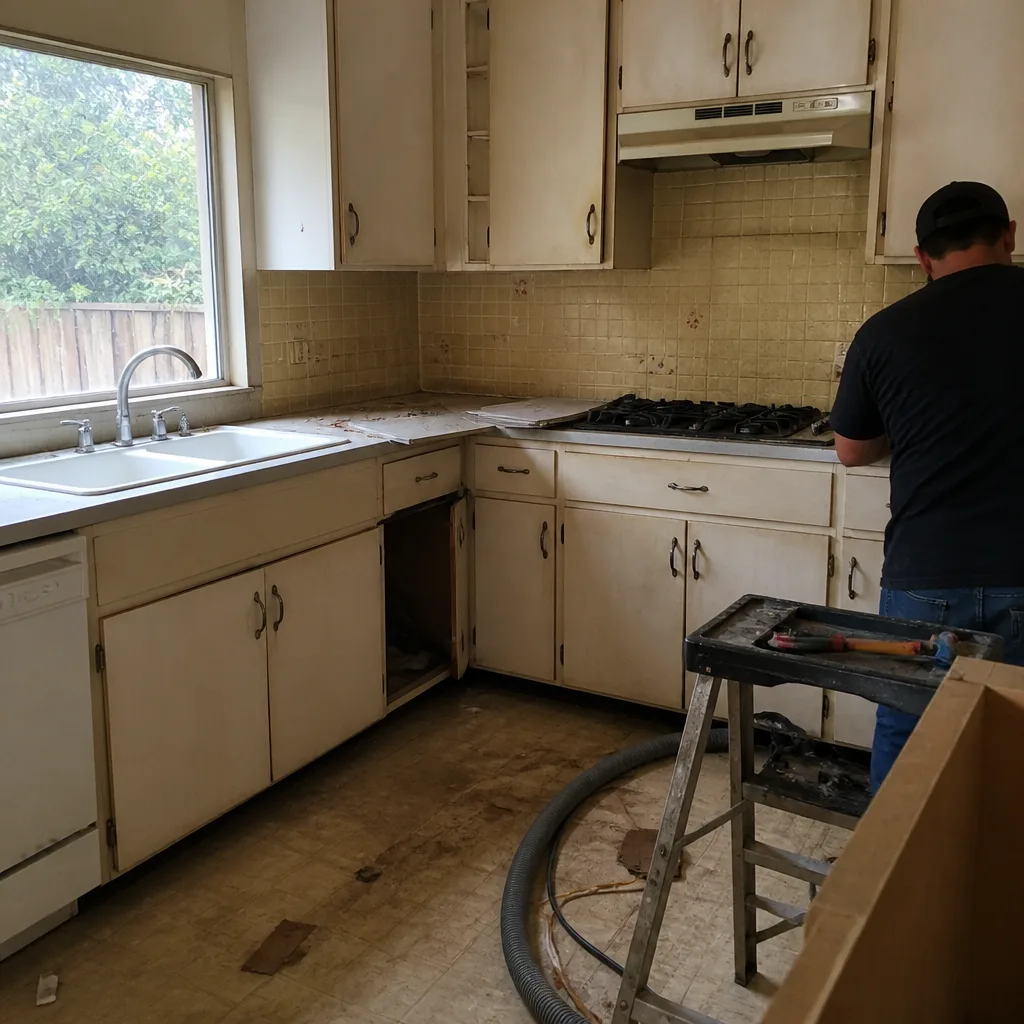 Before
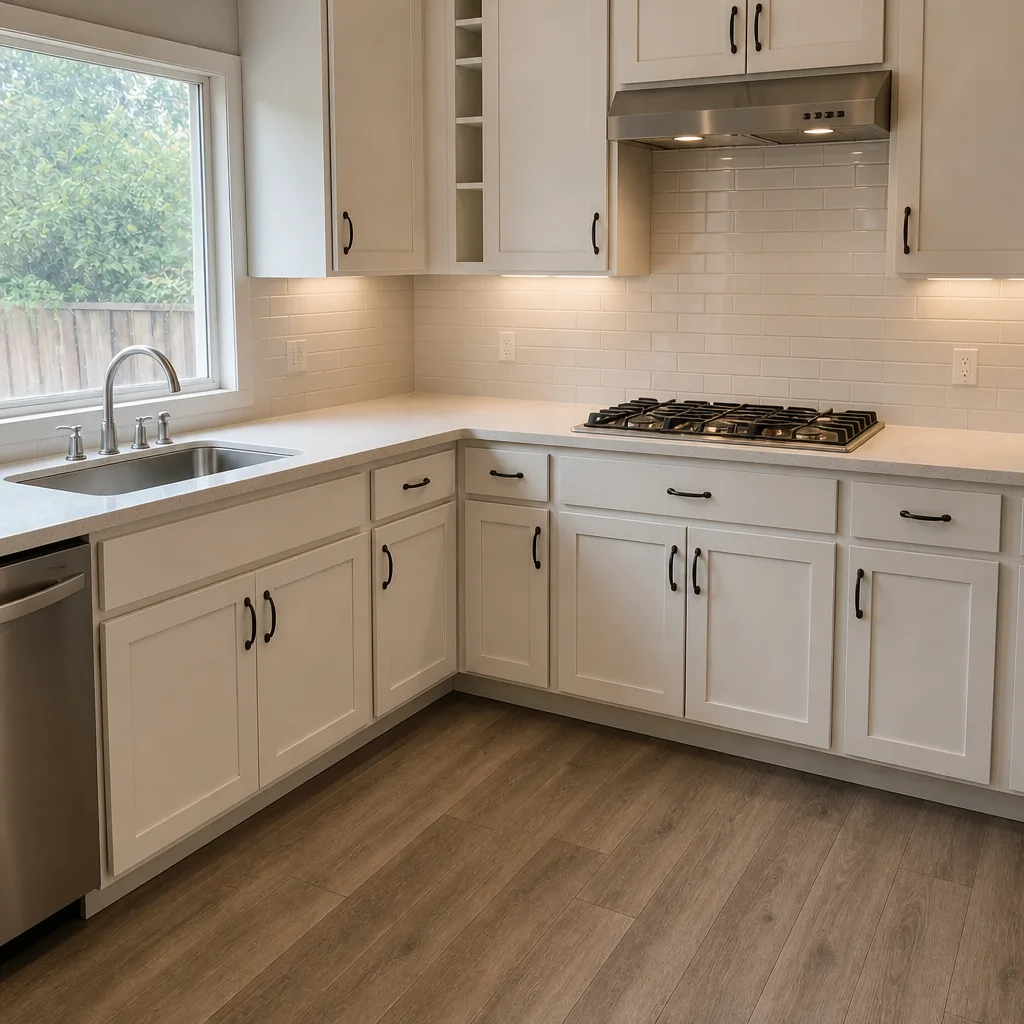 After
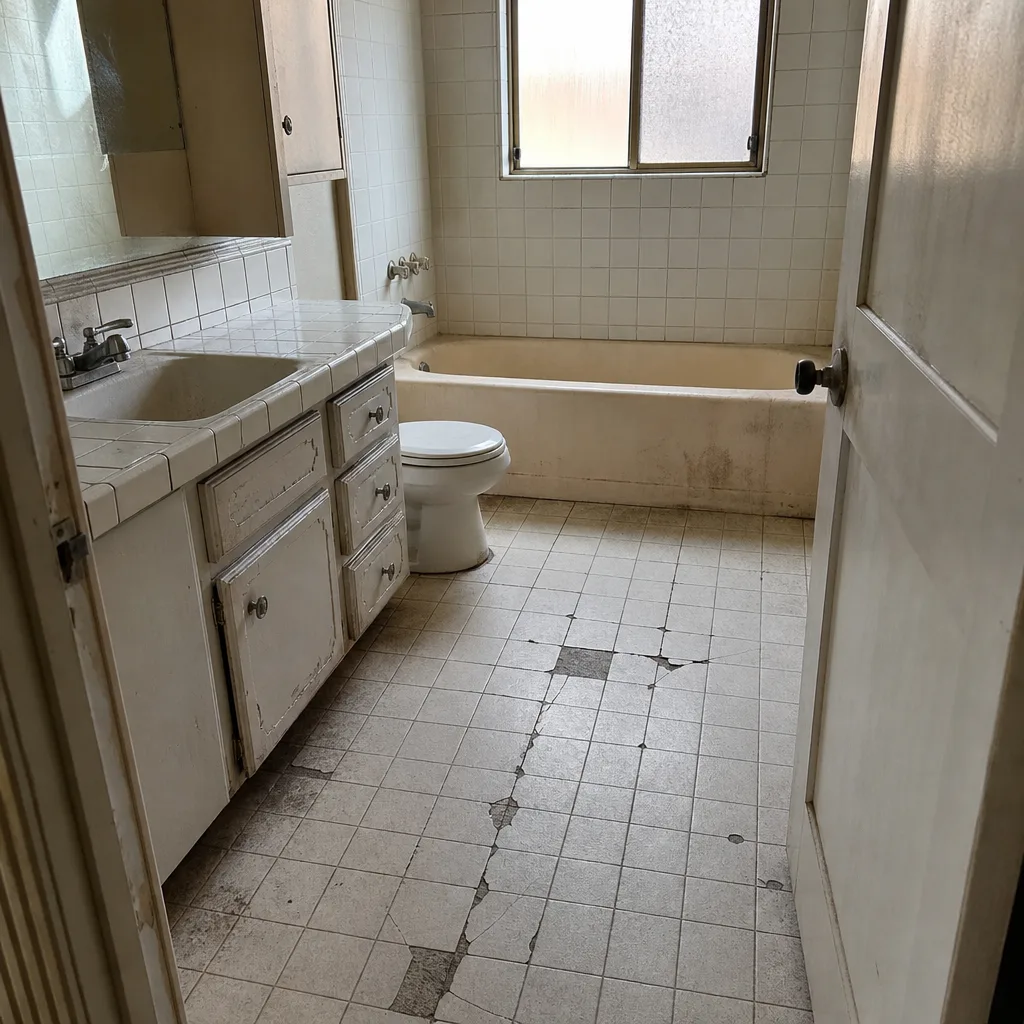 Before
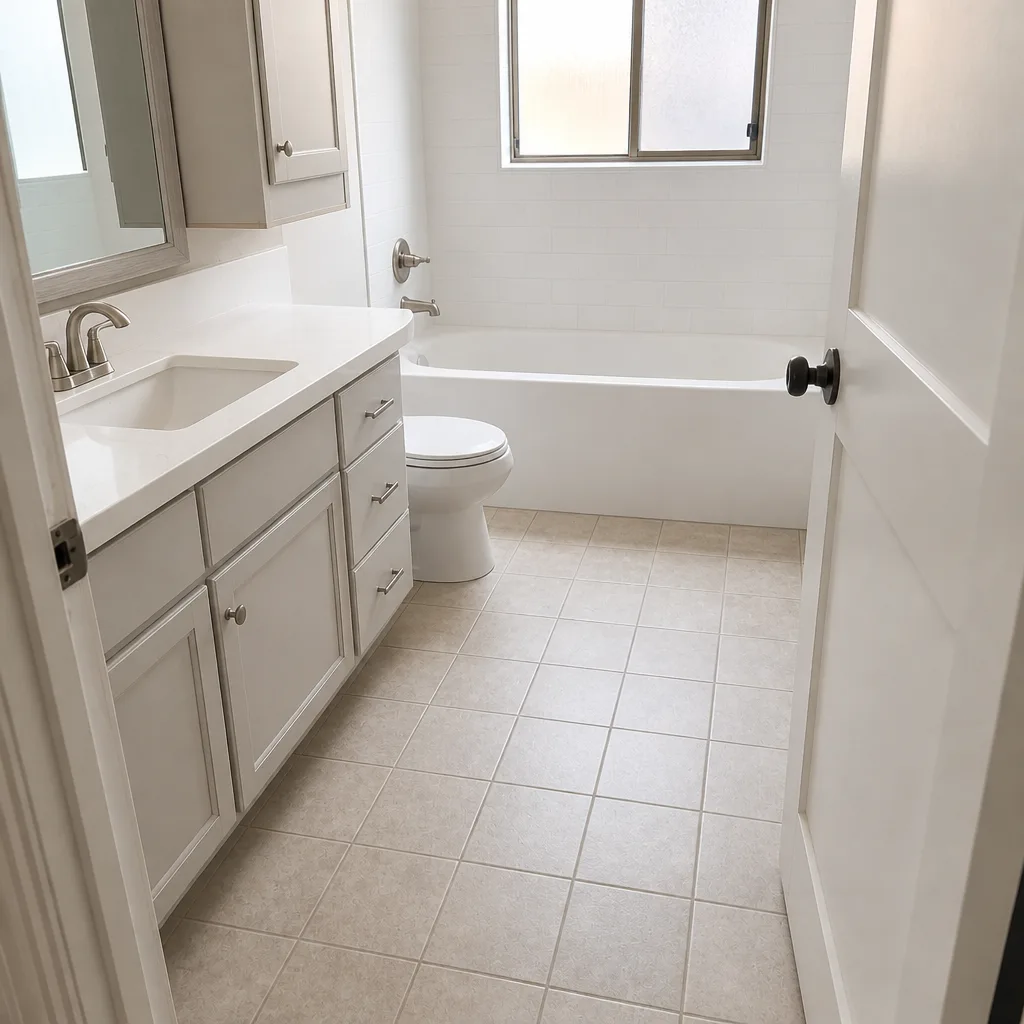 After
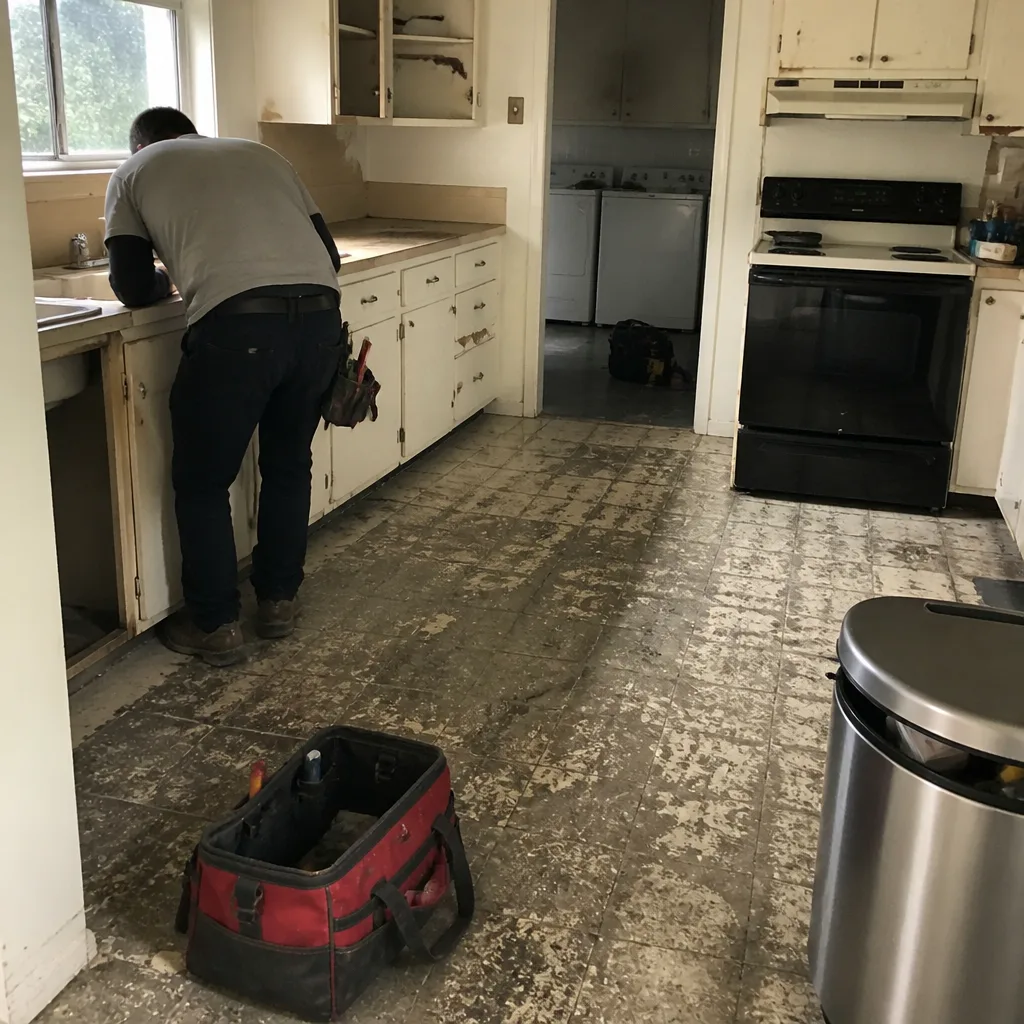 Before
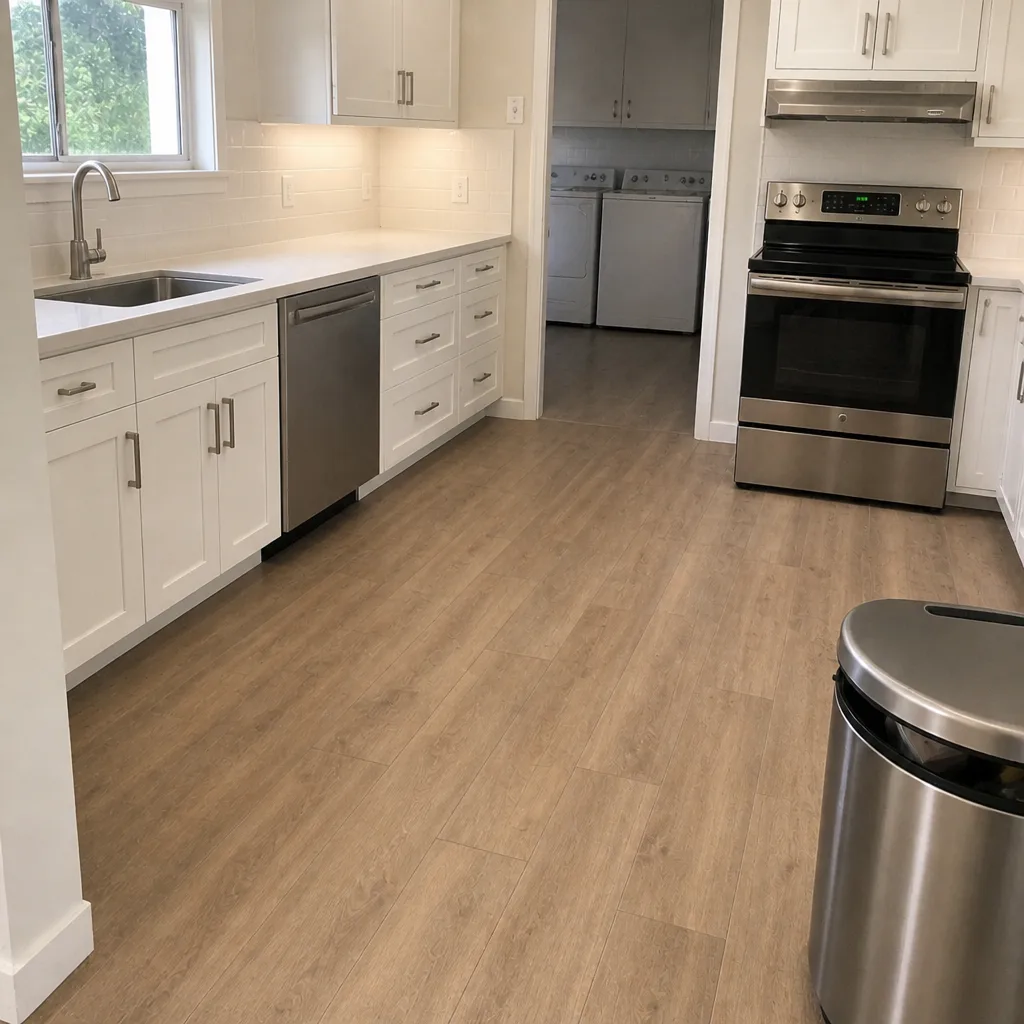 After
When to Call a Professional
Some of this you can do yourself. Sealing, joint sand replacement, and cleaning are all reasonable DIY tasks if you know what you’re looking at. But call a professional when:
- You see rocking pavers, dips, or heaving along edges. That’s a base problem, and it needs to be lifted and rebuilt.
- Water is pooling near the foundation, or you see damp staining along the house wall. Redirecting grading is drainage work, not surface work.
- A large section of the driveway has shifted and you’re not sure if it’s a repair or a full replacement.
- You’re planning a driveway alongside another project (an addition, an ADU, or a new fence along the driveway), and you want the drainage and grading planned once, not three times.
Construction Concord offers free estimates in Concord. Our technicians have up to 12 years of experience, and we can assess base movement, drainage, and material condition in one visit. Call (866) 611-9068 to schedule yours. We answer 24/7. Fast dispatch from 7am to 7pm, Sunday through Friday. The written estimate sets the final price, and it’s free.
Frequently Asked Questions
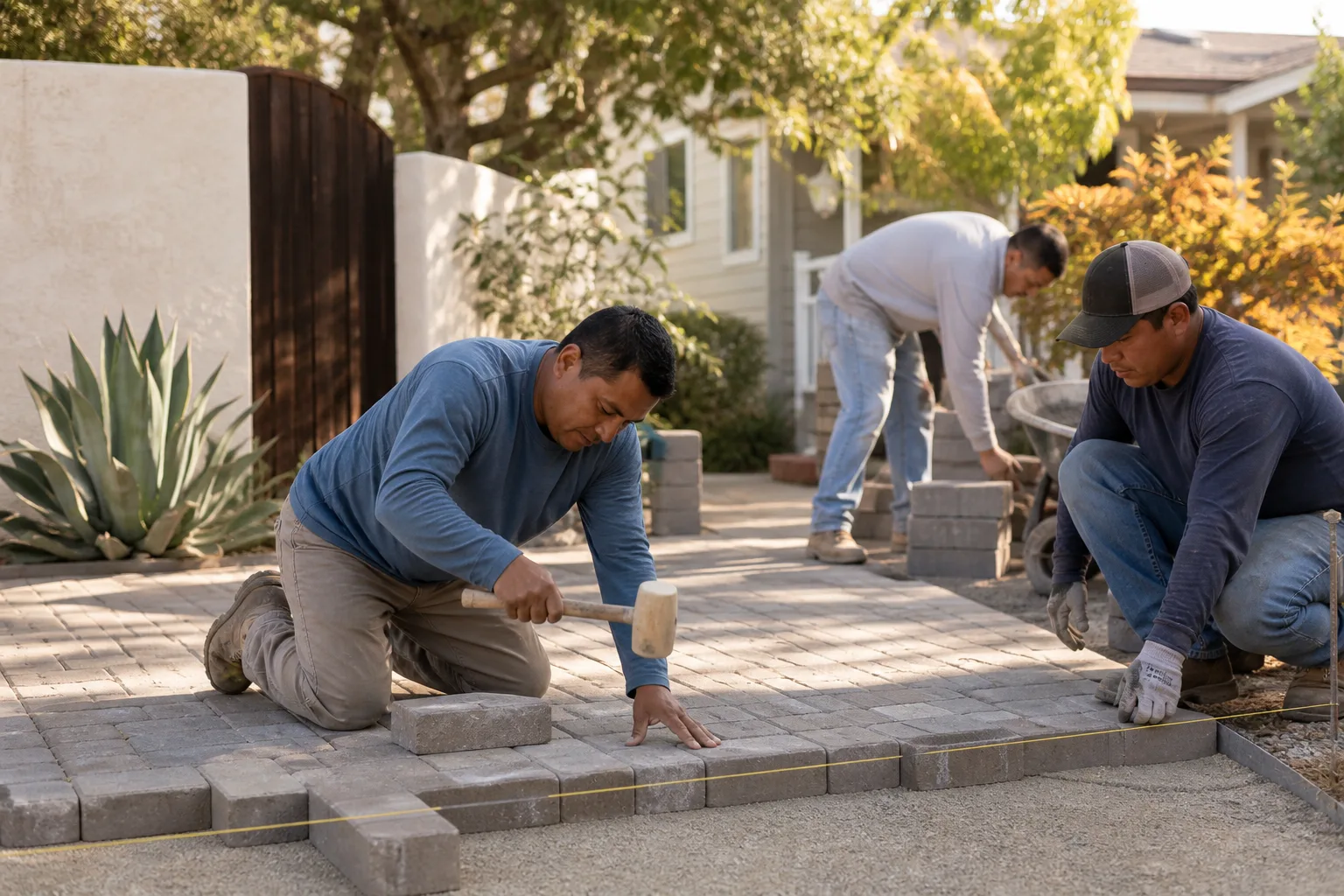
Every two to four years is typical in Concord’s climate, depending on sun exposure, traffic, and how much wind the driveway sees. Driveways that get strong afternoon sun and heavy use need re-sealing on the more frequent end. Always check for base movement before you seal, and always apply in the dry season when the surface is fully dry. Call (866) 611-9068 for a free assessment of whether your driveway is ready for sealer.
Because sealer protects the surface, not the base. If the compacted base is failing, or if water is getting under the pavers, the surface will shift no matter how well it’s sealed. Concord’s clay soils contract and swell with the seasons, which puts continuous pressure on the base. If your pavers are moving, the fix is a base inspection, not another coat of sealer. Call (866) 611-9068 for a free estimate to find the actual cause.
The dry season, after the ground has settled from the wet months. That gives the repair the best chance to cure properly and gives you a full dry window before the next rains. Drainage work and joint sand replenishment should happen before the November rains. If you need to schedule repairs, call (866) 611-9068 and we’ll help you pick the right window.
Watch the driveway during a heavy rain and follow where the water goes. If it pools within a few feet of the house wall, runs parallel to the foundation rather than away from it, or leaves erosion lines in the landscaping beds near the house, the grading has shifted. Damp soil or staining along the base of the garage wall is a strong additional sign. Grading that’s moving toward the house needs to be fixed before it does real damage. Call (866) 611-9068 for a free estimate on re-grading and paver repair.
No. Regular play sand and bagged leveling sand don’t compact into the joints the way fine joint sand designed for pavers does. The right joint sand locks the pavers together and supports the surface under tire loads. In Concord’s wind and runoff zones, joint sand also needs to be checked more often, roughly quarterly along sloped sections. If joint sand keeps washing out, the grading is likely part of the story. Call (866) 611-9068 to have the drainage and joints assessed together.
It depends on what the repair involves. Small joint sand and sealer maintenance typically doesn’t require one, but grading changes and full replacements often do. Before any work starts, we check with the city’s building department on your behalf, and we pull the permits and pass the inspections where they’re required. Call (866) 611-9068 for a free estimate, and we’ll tell you what’s needed for your specific project.
The Bottom Line
Maintaining a paver driveway in Concord is really two jobs, one above and one below. The surface work, cleaning, joint sand, and sealing, belongs in the dry season and keeps the pavers looking sharp and holding their color. The base work, checking for movement and confirming drainage is sending water away from the house, is what actually protects the driveway from a few wet winters. Do both, and adjust joint sand and drainage checks to your specific property’s wind and runoff patterns, and the driveway you’re sealing is one that isn’t quietly coming apart underneath. The driveway reaches all the way to the kitchen door, so if you’re planning work on more than one area of the home, seeing it as one coordinated project saves time and surprises.
Written by the team at Construction Concord.